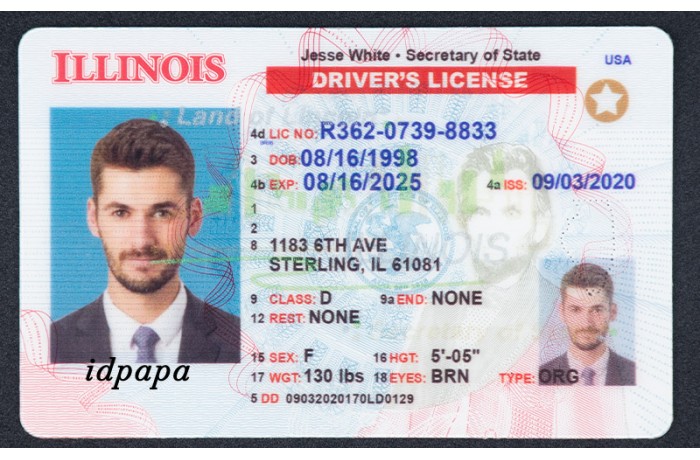
Gaining access to exclusive clubs often requires a seemingly simple piece of plastic: a valid copyright. But what if you don't have one? For some, the lure of bypassing age restrictions or assuming false identities can be irresistible. This leads to a dangerous shadow economy where copyright IDs are crafted with increasing sophistication.
These fake identifiers are no longer just crudely tampered copies. With advancements in technology, making a copyright scannable is becoming a reality.
The process involves intricate features that mimic the layout of genuine IDs. High-tech scanners are used to analyze real IDs, and this information is then employed into the design of copyright.
- Custom applications are used to generate convincing holograms, barcodes, and magnetic strips.
- Precision reproduction ensure that the ID looks authentic under scrutiny.
- Security features are often replicated with surprising precision.
While these advances make it increasingly challenging to detect copyright, law enforcement agencies are continually evolving their techniques. The fight against counterfeiting is a constant arms race, with both sides pushing the boundaries of technology.
It's important to remember that possessing or using a copyright is a serious offense with significant penalties. The allure of bypassing restrictions shouldn't outweigh the risks involved.
The Anatomy of a copyright ID
copyright identification documents have gotten more complex, making it challenging for scanners to identify them. These fraudulent IDs often imitate the security features of genuine documents, employing high-quality printing read more processes. They may even include laser engravings that seem real to the casual glance.
To circumvent scanners, counterfeiters often inject microchips that contain manipulated information. They may also modify the material properties of the paper used to produce the ID, making it hard for scanners to read the data.
- Additionally, some copyright IDs use special inks that are only visible under blacklight.
- Fraudsters also constantly adapt their techniques to stay ahead security measures.
Can You DIY a Scannable copyright?
So you wanna craft/forge/build yourself a copyright, huh? Thinkin' you can whip/hack/engineer up somethin' that'll actually pass/fool/trick those scanners at the club. Look, it ain't impossible to design/make/fabricate a copyright at home, but let's be real here - makin' it scannable/readable/detectable by security systems/software/checks? That's where things get tricky/complicated/challenging.
- You're dealing/battling/up against some seriously high-tech hardware/equipment/gadgets these days, kid.
- Security features/codes/measures are gettin' more sophisticated/advanced/complex by the day.
- Even if you manage to replicate/copy/duplicate the basic design/layout/structure, the tiny details/nuances/variations can throw it off.
Bottom line: don't get your hopes up about makin' a foolproof replica/copyright/fake with just a printer/scanner/computer. It ain't worth the risk, trust me. Stick/Hold/Stay to legal ID options, or you might end up in a sticky/messy/unpleasant situation.
Inside the Tech: How Scannable copyright Fool the System
These days, forging an ID isn't just about a clumsy Design Program job anymore. The rise of scannable copyright is a whole different ball game. Masterminds are leveraging cutting-edge technology to create illegitimate documents that sometimes pass even the most sophisticated scanners. Think high-resolution photos, embedded microchips, and even UV paints designed to mimic the real deal.
- Detection systems, once thought foolproof, are now facing this onslaught of technological sophistication.
- The stakes are high. These scannable IDs enable a host of illegal activities, from identity theft to underage drinking and even drug trafficking.
It's a constant battle between security measures and those seeking to exploit them. The question remains: will technology eventually catch up the ingenuity of copyright creators?
Unmasking the Tech : Deciphering Scannable copyright Technology
The sphere of fake identification technology is constantly evolving, with advanced methods emerging to evade security measures. One especially troubling trend involves the production of scannable copyright that can effortlessly fool even the most strict scanners. These forged documents often employ cutting-edge printing techniques and materials that mimic the genuineness of real IDs, making them increasingly difficult to detect.
- Exploring the scientific underpinnings of these copyright is crucial for developing effective countermeasures.
- This exploration will delve into the materials used, the production processes involved, and the sophistication of the designs.
- Finally, this knowledge will empower authorities to combat the growing threat of scannable copyright and protect against their detrimental consequences.
Exposing the Deception: A Look at Scannable copyright Production
The world of copyright IDs is constantly evolving, with ingenious techniques used to manufacture documents that can easily pass scanning. Con artists are increasingly relying on high-tech methods to duplicate IDs that are nearly undetectable to the naked eye.
Verification protocols are constantly being refined to combat this alarming threat, but the battle between authorized identification and illegitimate documents is an ongoing contest.
- Lawbreakers often exploit vulnerabilities in verification processes to create copyright that are complex to identify.
- High-resolution scanners are commonly used in the fabrication of scannable copyright, allowing criminals to create documents that are virtually identical to real ones.
- Regulatory bodies are making significant efforts to combat the issue of scannable copyright through enhanced security measures, public awareness campaigns, and stricter penalties for those involved in their production.